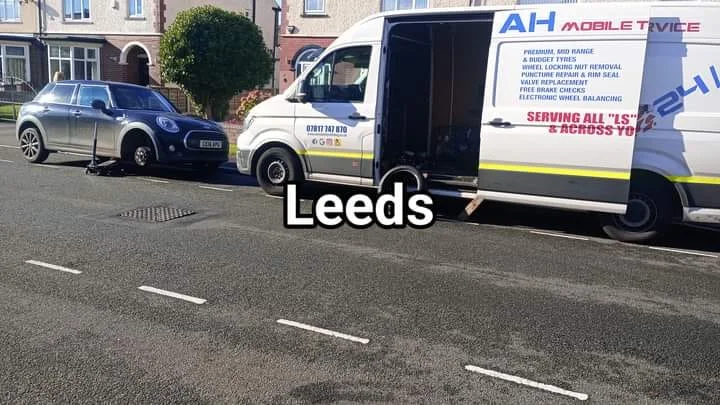

AH Mobile Tyre Fitting provides 24/7 mobile tyres in Leeds and tyre replacement throughout Yorkshire. The guidance below helps you make a safer decision before professional assistance arrives.
The quick answer
Part-worn tyres are legal to sell and fit in the UK, but sellers must follow strict rules. Under the Motor Vehicle Tyres (Safety) Regulations 1994, a part-worn tyre must have at least 2mm of tread across its full width and all the way round, carry a permanent 'PART-WORN' marking, be free of serious cuts, bulges and exposed cords, and any repairs must meet BS AU 159. The legal minimum tread for a car tyre on the road is lower, at 1.6mm, but that is the limit for driving, not for selling. A good part-worn can be a sensible budget choice. A bad one is a used tyre with problems you can't see, so buy from someone who checks properly.
What counts as a part-worn tyre
A part-worn tyre is simply a used tyre that's being sold again. They usually come from cars that have been scrapped or written off, from drivers who changed tyres early, or from vehicles that switched to a different size or type. Many have plenty of tread and years of use left. Others have been driven underinflated, kerbed, repaired badly or left in the sun for years. From a quick glance on a rack, the two can look very similar. That's why the law puts the responsibility on the seller. Anyone supplying part-worn tyres, whether a tyre shop, a market trader or someone selling online as a business, has to check each one meets the regulations before it's sold.
The law that applies
The rules are set by the Motor Vehicle Tyres (Safety) Regulations 1994, as amended by the Motor Vehicle Tyres (Safety) (Amendment) Regulations 2003. They're enforced by Trading Standards. The regulations cover the condition a part-worn tyre must be in at the point of sale, how it must be marked, and what standard any repair must meet. They apply to tyres sold on their own and to tyres supplied already fitted to a wheel. In short, the seller must make sure the tyre has enough tread, is properly marked, has no structural damage, and has only been repaired to the British Standard. If a seller can't tell you how they check their tyres, that's a warning sign in itself.
At least 2mm of tread, everywhere
A part-worn tyre must have tread grooves of at least 2mm deep across the full breadth of the tread and around the entire circumference. That's stricter than the 1.6mm road limit, and it covers the whole tread, not just the middle. The reason is simple. A tyre sold with only just over the legal driving minimum would be illegal on your car within a few weeks. The 2mm rule gives you some useful life from the tyre. When you buy, check the depth yourself in several places across the tread and at different points round the tyre. Uneven wear, such as one edge much lower than the other, can point to the tyre having come off a car with alignment or suspension problems.
The PART-WORN marking
Every part-worn tyre sold must be marked with the words 'PART-WORN' in capital letters at least 4mm high. The marking has to be permanent and legible, applied next to the tyre's approval marks, and it can't just be a sticker or chalk. It should also still carry its original approval markings, such as the E-mark, which show the tyre was made to a recognised standard. If you're offered a used tyre with no PART-WORN marking, it hasn't been sold in line with the regulations. That doesn't automatically mean the tyre is dangerous, but it tells you the seller isn't following the rules, so you can't rely on them having done the other checks either.
Inspected under pressure
Some defects in a tyre's structure only show themselves once it's inflated. A damaged casing can look normal when the tyre is lying flat on a shelf, then bulge or distort when air goes in. Trading Standards guidance is that a part-worn tyre should be inspected after being fitted and inflated to its highest operating pressure, particularly when it's sold on its own rather than already on a wheel. As a buyer, you can ask how the tyres have been checked. A seller who inflates and inspects their stock before sale will be happy to explain. Once your tyre is fitted and inflated, take a look at it yourself before you drive off, and walk away from anything with a lump or bulge.
Damage that rules a tyre out
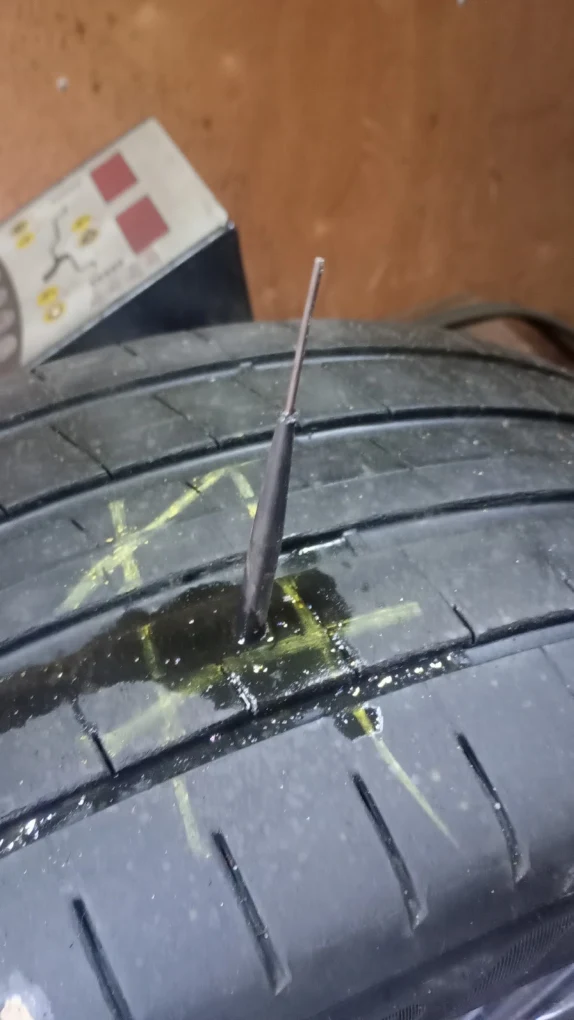
A part-worn tyre can't be sold if it has cuts in excess of 25mm or 10% of the section width, whichever is greater. It also can't have any lumps or bulges caused by the structure separating or failing, and no ply or cord can be exposed. Unrepaired penetration damage is also not allowed. A tyre with a nail hole that hasn't been properly repaired cannot be sold as a part-worn. When you look at a tyre, check both sidewalls as well as the tread. Look for cracking in the rubber, scuffs from kerbs, and any bubbles or uneven shapes. Run your hand carefully round the inside if you can, feeling for patches, rough areas or loose material.
Repairs must meet BS AU 159
A part-worn tyre can have been repaired, but the repair must comply with BS AU 159, the British Standard for tyre repairs. That means it should be in the central three-quarters of the tread, no larger than the standard allows, and done with a plug and patch from the inside. A plug pushed in from outside, a repair in the shoulder or sidewall, or a patch over obvious damage are all reasons to reject the tyre. Ask the seller whether the tyre has been repaired and where. Any decent supplier will tell you, and will have taken the tyre off the rim to check the inside. If they don't know, that tells you they haven't looked.
Once it's on your car: the 1.6mm limit
After fitting, a part-worn tyre is treated like any other tyre on the road. The legal minimum tread for cars is 1.6mm across the central three-quarters of the tread and around the whole circumference. The penalty for driving on an illegal tyre is a fine and three penalty points per tyre, so four bad tyres could cost you your licence. Many safety experts suggest replacing tyres at 3mm because grip in the wet falls away as tread wears. That's worth thinking about when you buy. A part-worn with 2mm left won't last long before it reaches the legal limit, while one with more tread can make better sense for your money.
How to buy part-worns safely
Buy from an established supplier who can explain how they check their tyres. Avoid unmarked tyres, and be wary of very cheap stock with no questions asked. Check the date code on the sidewall. The last four digits show the week and year it was made. Tyres deteriorate with age even if the tread looks good, and older tyres are worth avoiding. Match the size, load index and speed rating to what your car needs, and keep tyres on the same axle matching in size and type. Look closely at both sidewalls and the tread for damage. Industry surveys have repeatedly found part-worns being sold illegally, so your own checks are worth the effort.
New or part-worn from AH Mobile Tyre Fitting
AH Mobile Tyre Fitting supplies both new and part-worn tyres for cars, vans, 4x4s, caravans and trailers, with budget, mid-range and premium options. If a part-worn makes sense for your budget, we'll talk it through, and if a new tyre is the better choice for your car, we'll say so. Every fitted tyre includes electronic wheel balancing free of charge, and we fit at your home, your workplace or the roadside across Leeds and Yorkshire, 24 hours a day. The price is agreed on the phone before the van sets off. Call 07817 747870 with your tyre size and we'll go through the options.
Official safety sources
This article was checked against current official guidance. Always follow instructions from the emergency services, police, traffic officers or road operator at the scene.
Need help with a tyre now?
Call with your location, registration and sidewall tyre size.
Call 07817 747870