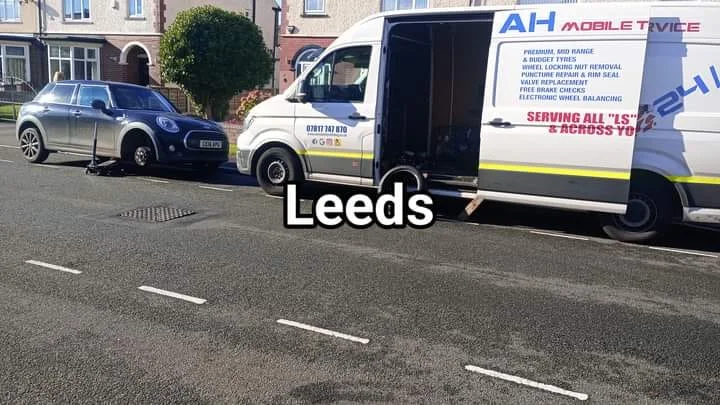
AH Mobile Tyre Fitting provides 24/7 mobile tyres in Leeds and tyre replacement throughout Yorkshire. The guidance below helps you make a safer decision before professional assistance arrives.
The quick answer
A car tyre can usually be repaired if the puncture sits in the central three-quarters of the tread, the hole is no bigger than 6mm across, and the tyre hasn't been driven on while flat or badly underinflated. If the damage is in the sidewall or shoulder, is larger than 6mm, or the inside of the tyre has been chewed up by running flat, it needs replacing. The rules come from BS AU 159, the British Standard for tyre repairs. It also says how the repair must be done: the tyre comes off the wheel, gets inspected inside, and is sealed with a combination plug and patch fitted from the inside. A plug pushed in from the outside is not a BS AU 159 repair, however neat it looks.
What BS AU 159 actually is
BS AU 159 is the British Standard that sets out how a car or van tyre should be assessed and repaired after a puncture. It covers where on the tyre a repair is allowed, how big the damage can be, and what method must be used so the repair is safe and permanent. It matters because a tyre is a structure, not just a rubber tube. Under the tread are steel belts and body plies that hold the tyre's shape at speed and under load. A repair has to seal the air in and protect that structure from moisture and further damage. When a fitter says a repair is done to BS AU 159, they mean it has been inspected and carried out to that standard, not just bunged up so it holds air for now.
The repairable zone: the central three-quarters
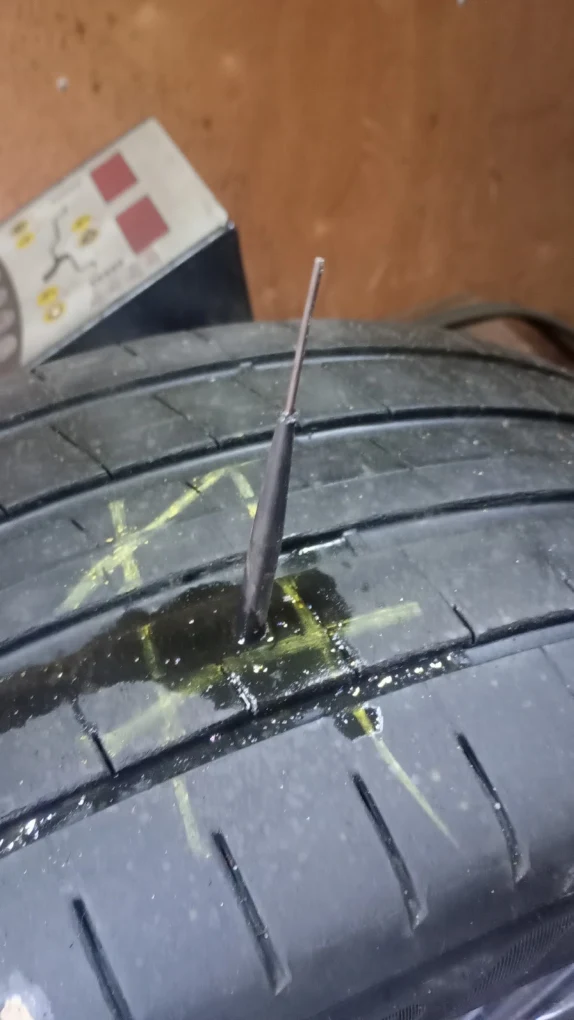
The standard only allows repairs in the central three-quarters of the tread width. Picture the tread split into eight strips across its width: the outer strip on each side is off limits, and everything in between can be considered. The reason is how a tyre flexes. The shoulder and sidewall bend constantly as the wheel turns and carry much of the load. A patch in that area is worked hard on every revolution and can't be relied on to stay sealed. So a nail slap in the middle of the tread is often good news, while one sitting right on the edge, where the tread rounds into the shoulder, usually means a new tyre. A good fitter will measure where the hole actually is rather than guess by eye.
The 6mm damage limit
For car tyres, the damage itself must be no more than 6mm in diameter to be repairable. That covers most screws, nails and small bits of metal picked up from the road. What counts is the size of the damage through the tyre, not just the hole you can see on the surface. A screw can tear a wider channel as it works its way in, especially if the car has been driven on it for a while. That's one reason the fitter needs to look inside. Anything bigger than 6mm, such as a slash from a sharp edge, a split from a pothole or a large bolt, isn't repairable under the standard. The tyre should be replaced, even if the rest of it looks nearly new.
Why the tyre has to come off the wheel
You can't properly judge a puncture from the outside. A nail might leave a tidy hole in the tread while the inner liner has been scuffed, the plies have been cut, or the tyre has been run low enough to damage the sidewall from the inside. That's why a proper repair starts with the tyre being removed from the rim. The fitter checks the inner liner for rubbing, crumbs of rubber or a shiny band around the inside, which are tell-tale signs it has been driven underinflated. They also check the bead and the rest of the casing. Only once the inside has been cleared does the repair go ahead. If the inspection finds hidden damage, the tyre is condemned and replaced, because a patch can't fix a weakened structure.
Why an outside plug is not a BS AU 159 repair
Roadside plug kits, sometimes called string repairs, push a sticky cord into the hole from the outside. They can stop a leak, but they do not meet BS AU 159. The standard requires a combination plug and patch fitted from inside the tyre. The plug fills the hole through the tread, and the patch seals the inner liner and reinforces the area. An outside plug does neither job fully, and because the tyre never comes off the wheel, nobody has checked for internal damage. If you've had an outside plug fitted somewhere, treat it as a temporary fix at best. Get the tyre looked at properly, and expect that a fitter may decide it needs replacing once they see the inside.
Tyres that have been driven flat
One of the conditions for a repair is that the tyre has not been used while flat or with insufficient pressure. This catches a lot of drivers out. When a tyre runs very low, the sidewalls fold and get pinched between the road and the rim. The rubber heats up and the inner liner breaks down, often leaving a ring of damage around the inside. From the outside the tyre can look fine, but its structure is compromised. That's why stopping quickly matters. A slow puncture caught early is often repairable. The same puncture driven on for a few miles after the tyre has gone soft frequently isn't, because the hole has become the least of the problems.
Run-flat tyres
Run-flat tyres have stiff, reinforced sidewalls that let you keep driving for a limited distance after a puncture. That's useful on the day, but it makes repair difficult. Because the tyre keeps its shape when deflated, the damage caused by running on it is often hidden, and it's hard to be sure the internal structure is sound. For that reason most tyre specialists will not repair a run-flat, and the usual advice is to replace it. If your car is on run-flats, check your handbook and the tyre maker's guidance, and assume a puncture will mean a new tyre. You can usually spot run-flats by markings on the sidewall such as RFT or SSR.
Sidewall and shoulder damage
Any puncture, cut or bulge in the sidewall rules out a repair. The sidewall is thinner and more flexible than the tread and it carries much of the vehicle's weight, so a patch there can't be trusted. The same applies to damage in the shoulder, outside the central three-quarters. Kerb strikes and potholes can also leave bulges or bubbles on the sidewall, which mean the internal cords have broken. These aren't punctures, but they are a clear sign the tyre needs replacing straight away. If you're unsure where the damage is, take a photo and describe it when you call. It helps the fitter tell you whether you're likely to be looking at a repair or a replacement before they arrive.
What to do until it's sorted
If you spot a nail or screw in the tread, leave it where it is. Pulling it out usually turns a slow leak into a fast one and can make it harder to judge the damage. Keep the tyre at its correct pressure if you can and avoid driving on it any more than you have to. If the pressure keeps dropping, or the tyre has gone flat, stay put rather than trying to make it home. Every mile on a soft tyre lowers the chance of a repair. If you've used an emergency sealant or inflator kit, mention it when you book. The fitter needs to know what's been put inside the tyre before they start work.
How AH Mobile Tyre Fitting handles punctures
AH Mobile Tyre Fitting carries out BS AU 159 puncture repairs at your home, workplace or the roadside across Leeds and Yorkshire, 24 hours a day. The approach is simple: inspect first, repair if it's safe, and only replace the tyre if a repair isn't. If replacement is needed, AH can fit new or part-worn tyres in budget, mid-range and premium options, with electronic wheel balancing included free with every fitted tyre. Locking wheel nut removal and valve replacement can be handled on the same visit. You'll agree the price on the phone before the van sets off and get a real arrival time. Call 07817 747870 and tell us where the damage is on the tyre.
Official safety sources
This article was checked against current official guidance. Always follow instructions from the emergency services, police, traffic officers or road operator at the scene.
Need help with a tyre now?
Call with your location, registration and sidewall tyre size.
Call 07817 747870