AH Mobile Tyre Fitting provides 24/7 mobile tyres in Leeds and tyre replacement throughout Yorkshire. The guidance below helps you make a safer decision before professional assistance arrives.
The quick answer
Caravan and trailer tyres usually need replacing because of age, not wear. The Caravan and Motorhome Club advises replacing caravan tyres at five years old and never using them beyond seven, counted from the date of manufacture on the sidewall, not the date they were fitted. Before each trip, check pressures with the tyres cold, look for cracks, bulges and cuts, and make sure the tread is at least 1.6mm. Replacement tyres must have the right load index and speed rating for your caravan. You don't have to tow on old tyres to a garage to get them changed. Mobile caravan tyre fitting means the work can be done where the caravan is parked, at home or on site.
Why caravan tyres age out before they wear out
A caravan might cover only a couple of thousand miles a year, so the tread rarely wears down. That makes it tempting to judge the tyres by tread depth alone and keep them for years. The problem is that rubber deteriorates with time, whether the tyre is used or not. Exposure to sunlight and the atmosphere gradually breaks down the compounds, and repeated flexing and impacts add fatigue inside the structure. Long spells parked in one position don't help either. An old tyre can look fine, with deep tread and a clean sidewall, and still be weakened inside. On a heavy caravan at motorway speeds, that's exactly when a failure can turn dangerous.
Reading the date code
Every tyre carries a manufacture date on its sidewall. Look for a four-digit number, usually at the end of a longer code beginning with DOT, sometimes inside an oval. The first two digits are the week and the last two are the year. So 3011 means the tyre was made in week 30 of 2011, and 1522 would be week 15 of 2022. The code may only be on one side of the tyre, so check both sidewalls if you can't see it. Write the dates down for each tyre and the spare. It makes it easy to plan replacements, and it's a useful check when buying a used caravan, because tyres are often the first thing to have been overlooked.
Five years, never seven
The Caravan and Motorhome Club's guidance is to replace caravan tyres when they reach five years old and never to use them when more than seven years old. The same advice has been given by the tyre manufacturers' trade body. The clock starts from the date of manufacture, not when the tyre went on the caravan. A tyre that sat in a warehouse before it was fitted is already part-way through its life. Tyres running at high pressures, of 50psi or more, need closer attention. The Club advises inspecting these from three years old and retiring them at five. If you're not sure what your pressures are, check the caravan handbook or the plate or marking on the wheel arch.
Load index and speed rating
Caravans put a lot of weight on just two tyres, so the load index matters. It's the number in the tyre size marking that tells you how much weight each tyre is designed to carry, and the letter after it is the speed rating. Replacement tyres should have a load index and speed rating at least equal to what the caravan or trailer manufacturer specifies. Fitting a tyre with a lower load index than required risks overloading it. Watch how your caravan is loaded, too. Uneven wear across the width of the tread, even a small difference, can be a sign the tyres are carrying more weight than they should. Keep heavy items low and over the axle.
Getting the pressures right
Correct tyre pressure is one of the most important checks for towing. Underinflated tyres flex more, run hotter and are more likely to fail, while overinflated tyres reduce grip and wear unevenly. Check pressures with the tyres cold, before you set off, using the figures in your caravan handbook or on the marking near the wheel arch. Caravan pressures are often higher than people expect, so don't assume they match your car's. A reliable gauge is worth having in the caravan. Some owners also fit a tyre pressure monitoring system for continuous alerts while towing. Whatever you use, make pressure checks part of your routine before every trip, not just at the start of the season.
Pre-trip tyre checks
Before you hitch up, walk round the caravan and check each tyre, including the spare. Look for cracking in the sidewalls, especially fine cracks near the rim, along with any cuts, bulges or blisters. Check tread depth in several places. The legal minimum is 1.6mm across the central three-quarters of the tread and around the whole circumference. Many owners replace well before that. Inspect the valves too. Rubber valves perish over time, and a cracked valve can let air out slowly. Make sure every valve has a cap. If anything looks doubtful, get it checked before you tow, because problems are far easier to deal with on your drive than on the motorway.
Storing your caravan over winter
How a caravan is stored has a big effect on its tyres. If it's laid up for a long period, the Caravan and Motorhome Club suggests removing the wheels and storing them at their normal pressure in a cool, dry place away from direct sunlight, heat, fuel and oil. Use a natural covering rather than plastic. If the wheels stay on, move the caravan or rotate the wheels regularly so the same section of tyre isn't always bearing the load. This helps avoid flat spots and keeps the rubber flexing. Tyre covers or parking under cover reduce UV exposure. When the season starts, check pressures and condition before your first trip.
Don't forget the spare
The Caravan and Motorhome Club strongly advises carrying a spare wheel and tyre that match the originals. It's easy to forget about, because many spares are never used. That's the problem. A spare can be as old as the caravan itself and may have been sitting underinflated for years. If you need it on a long trip, an aged or flat spare isn't much use. Check its date code and pressure along with the road tyres, and replace it on the same schedule. Make sure the carrier mechanism works and isn't seized, and that you have the right tools to change a caravan wheel. Your wheel brace may be different from the one in your car.
Trailers too
Trailer tyres face many of the same issues as caravan tyres. Box trailers, horseboxes and work trailers often spend long periods parked, then carry heavy loads with little warning. The same principles apply. Check the date code, replace aged tyres even if the tread looks good, and make sure replacements have the correct size, load index and speed rating for the trailer. Small trailer wheels turn faster than car wheels at the same road speed, which adds heat and wear. Check pressures before every journey, look for cracking and damage, and check the valves. If the trailer has been sitting for a while, give the tyres a proper inspection before it goes back on the road.
Mobile caravan tyre fitting with AH
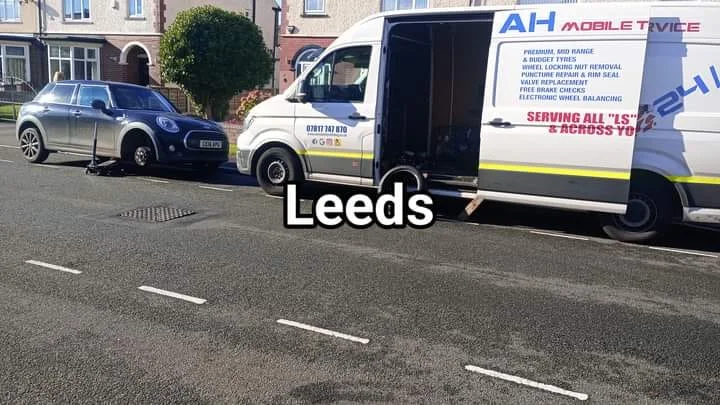
Towing a caravan on old or damaged tyres to reach a garage is exactly what you want to avoid. AH Mobile Tyre Fitting comes to you instead, fitting caravan and trailer tyres on your driveway, at a storage site or on a campsite or caravan park across Leeds and Yorkshire. We supply new and part-worn tyres in budget, mid-range and premium options, with electronic wheel balancing included free with every fitted tyre. Valve replacement can be done at the same time, and punctures are inspected first and repaired to BS AU 159 where it's safe. The price is agreed on the phone before the van sets off. Call 07817 747870 with your caravan or trailer tyre size.
Official safety sources
This article was checked against current official guidance. Always follow instructions from the emergency services, police, traffic officers or road operator at the scene.
Need help with a tyre now?
Call with your location, registration and sidewall tyre size.
Call 07817 747870