AH Mobile Tyre Fitting provides 24/7 mobile tyre fitting in Leeds and tyre replacement throughout Yorkshire. The guidance below helps you make a safer decision before professional assistance arrives.
The quick answer
If a tyre fails on a motorway, concentrate first on reaching a place of relative safety—not on arranging the tyre itself. The Highway Code says that a service area is the safest place to stop on a motorway or other high-speed road when it is possible to reach one. A mobile tyre fitter may be able to attend after the vehicle is safely parked inside services, at a recovery compound or at another authorised location with enough working space. A live lane, slip road, emergency area or hard shoulder is not treated as a normal fitting bay.
If the vehicle can still be controlled
Keep a firm grip on the steering wheel, avoid harsh braking or sudden steering and reduce speed progressively. Move left and leave the motorway at the next exit or enter a service area if the vehicle remains controllable and doing so is safe. Do not continue for miles solely to find a more convenient meeting place. A deflated tyre can deteriorate rapidly, damage the wheel and affect steering or braking. Follow the vehicle handbook if it has a run-flat system because permitted speed and distance are limited and vary by tyre and vehicle.
If you cannot reach an exit or service area
Move into the left lane and, if possible, stop in an emergency area or on the hard shoulder as far left as you can. Turn the wheels to the left and use hazard warning lights; use sidelights in darkness or poor visibility. If it is safe to leave, exit from the side furthest from traffic and get well away from the carriageway, behind a safety barrier where one is available. Watch for uneven ground, drops and debris beyond the barrier, and keep children under control.
If you are stranded in a live traffic lane
When the vehicle cannot reach the left lane or another place of relative safety, or when you cannot exit safely, stay inside with seat belts fastened and hazard lights operating. Call 999 immediately and ask for the police, or use the vehicle's SOS function where available. Do not attempt to inspect the wheel, unload passengers into moving traffic or arrange a fitter to enter the carriageway. The emergency services and road operator need to make the scene safer before recovery or tyre work is considered.
Get left, get safe and get help
Once stopped, contact the appropriate emergency or breakdown service using an emergency telephone, mobile phone or in-vehicle SOS system. Tell them if you are disabled, older, travelling alone or otherwise vulnerable. Remain alert to traffic and debris while waiting. If you have left the vehicle safely, do not return merely because it is cold, dark or raining. The immediate goal is protection from high-speed traffic; the tyre diagnosis comes after the vehicle and occupants are secure.
What not to do beside a motorway
Do not place a warning triangle on a motorway. Do not stand between the stopped vehicle and approaching traffic, attempt a wheel change beside live traffic or retrieve debris from the carriageway. Never walk across the motorway to reach the services on the opposite side. Paired service areas such as Woolley Edge, Woodall and Hartshead Moor may share a name while having completely separate vehicle approaches. A fitter must enter from the correct carriageway and cannot safely compensate for an incorrect direction by crossing the motorway.
When mobile tyre fitting becomes appropriate
Mobile fitting becomes an option after the vehicle reaches a stable, legal and accessible position. A marked service-area car bay can be suitable when the operator permits work and there is enough room beside the damaged wheel. Keep clear of fuel pumps, slip roads, coach stops, bus routes and HGV manoeuvring areas. A recovery depot, private driveway or authorised business car park may also work. AH confirms the site, tyre stock, route and permission requirements before dispatch rather than assuming that every car park allows contractors.
Recovery or mobile tyre fitter: which should you call?
Call emergency services or recovery first when the vehicle is in a live lane, exposed hard shoulder, emergency area, dangerous verge or any position where people or equipment would be close to fast traffic. Call a mobile tyre fitter after the vehicle reaches services or another protected location and the work can be completed without obstructing traffic. Recovery may still be necessary when the wheel is damaged, the vehicle cannot be lifted safely, the required tyre is unavailable or the site will not permit mobile work.
How to identify your exact motorway location
Give the motorway number, direction of travel and the junctions you passed or were approaching. A mobile mapping pin, emergency telephone reference, marker post or driver location sign can help the emergency services identify the position. Once at services, state the complete station name and direction, then add the parking row, hotel, shop, forecourt or other visible landmark. Do not rely on a shared postcode: it may cover both carriageways, local access roads and several separate parking zones.
What AH needs before dispatch
Send the registration, make and model, full tyre size and a clear photograph of the complete sidewall marking. Include the load index, speed rating and markings such as XL, run-flat or commercial construction where visible. Explain whether the tyre is flat, split, punctured or damaged by a pothole, and state how far the vehicle travelled after pressure was lost. Finally, confirm the exact safe parking position and whether site staff have authorised mobile tyre work in that bay.
Motorway service stations around Yorkshire
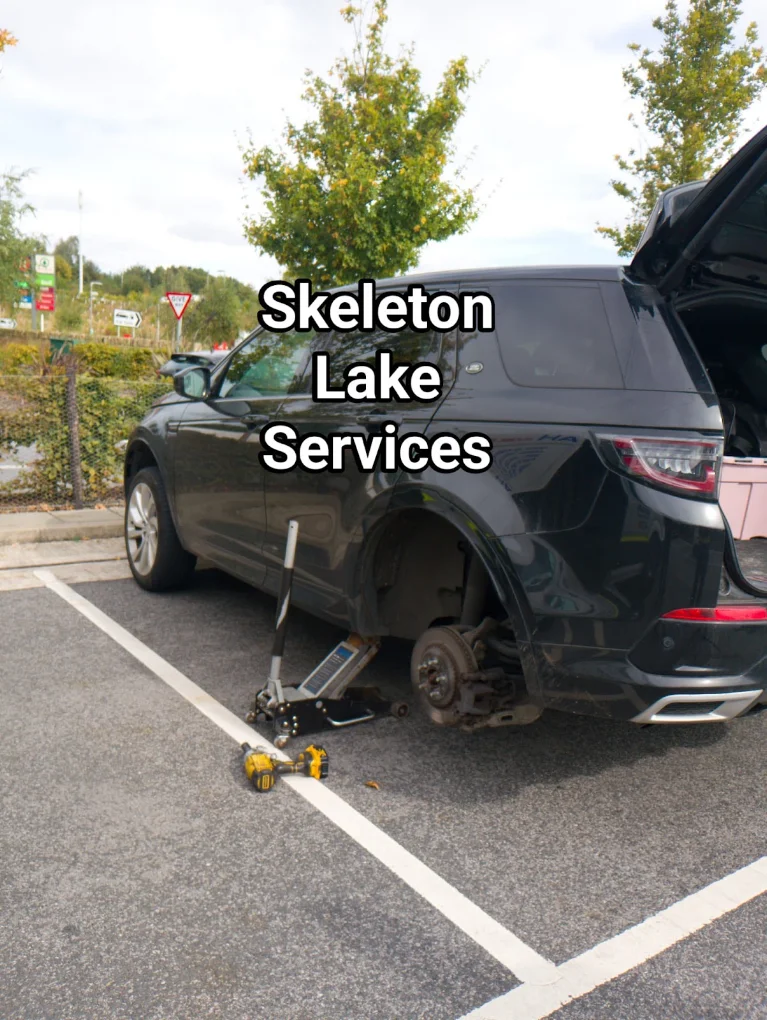
AH has individual call-out guides for major stops on the M1, M18, M62, A1(M), A64 and surrounding routes. These include Leeds Skelton Lake, Wetherby, Ferrybridge, Woolley Edge, Hartshead Moor, Woodall, Doncaster North, Leeming Bar and Bilbrough Top. Each page explains the carriageway direction and the details a fitter needs. Attendance depends on tyre availability, current travel distance, site conditions and a safe legal place to work.
Reduce the chance of another motorway tyre failure
Before a long journey, check cold tyre pressures against the vehicle manufacturer's figures for the load, inspect tread and both visible sidewalls, and investigate any repeated pressure loss. Look for cuts, bulges, exposed reinforcement, embedded objects and uneven wear. Check that the locking-wheel-nut key, inflation kit or usable spare is present where supplied. These steps cannot prevent every puncture or impact, but they can identify deterioration before motorway speed turns it into an emergency.
Official safety sources
This article was checked against current official guidance. Always follow instructions from the emergency services, police, traffic officers or road operator at the scene.
Need help with a tyre now?
Call with your location, registration and sidewall tyre size.
Call 07817 747870