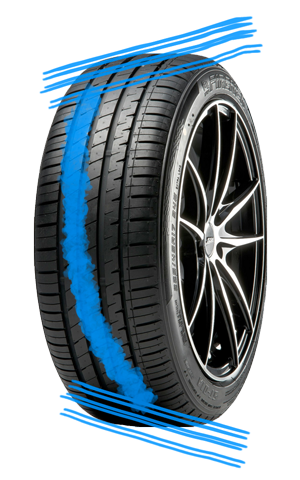
Camber or one-sided wear
Spotting it
The inside or outside edge is considerably more worn than the rest of the tread.
Possible cause
Possible causes include wheel-alignment or suspension problems, a bent strut or spindle, damaged control-arm bushes or a weak spring.
What to do
Arrange a tyre and suspension inspection rather than replacing the tyre without investigating the cause.
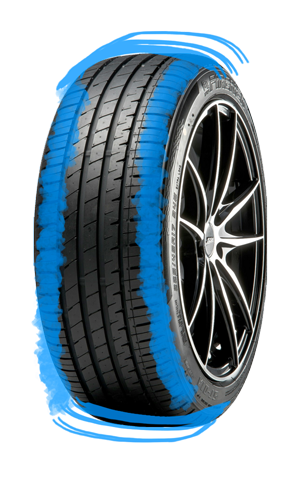
Shoulder wear
Spotting it
Both shoulders are worn more heavily than the centre of the tyre.
Possible cause
This pattern is often associated with prolonged underinflation, although load and driving conditions must also be considered.
What to do
Check the vehicle manufacturer’s cold-pressure figure and have the tyre inspected for damage before correcting the pressure.
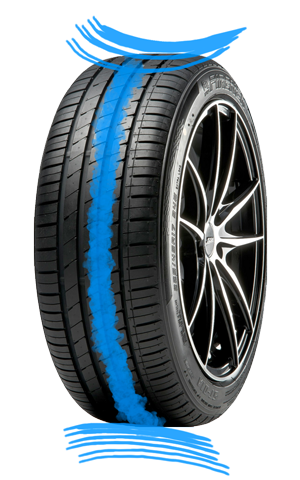
Feathered wear
Spotting it
The tread feels smooth when rubbed in one direction but sharp or rough in the other.
Possible cause
Toe misalignment or worn steering components such as tie rods, idler arms or steering links can create directional feathering.
What to do
Have the steering and alignment checked; fitting a replacement alone will not correct the underlying geometry.
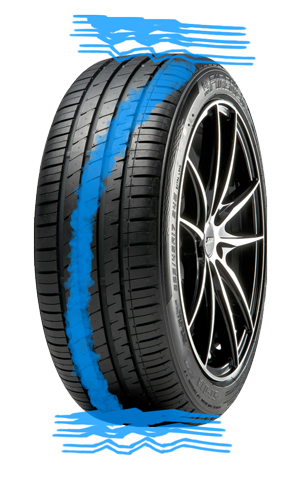
Centre wear
Spotting it
The centre of the tread is significantly more worn than both shoulders.
Possible cause
Sustained overinflation can make the centre of the tyre carry a greater share of the load.
What to do
Compare cold pressure with the handbook or vehicle label and arrange an inspection if the pattern is advanced or irregular.
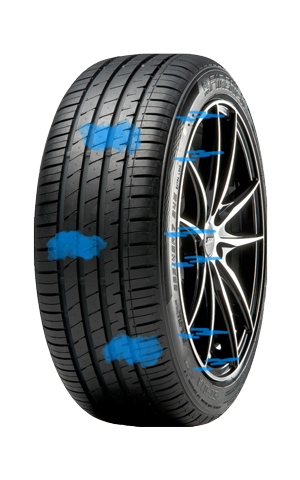
Cupped wear
Spotting it
Repeated cups or dips appear around the edge or across sections of the tread.
Possible cause
Wheel imbalance, weak shock absorbers, worn struts or other suspension movement can allow the tyre to bounce as it rotates.
What to do
Check wheel balance and have the suspension inspected before a replacement tyre develops the same pattern.
Flat spotting
Spotting it
One local section of tread is flatter or more worn than the rest and may cause a rhythmic vibration.
Possible cause
Hard braking, long storage, underinflation or structural damage can all contribute, depending on the pattern.
What to do
Avoid high-speed driving until the tyre and wheel have been assessed professionally.